
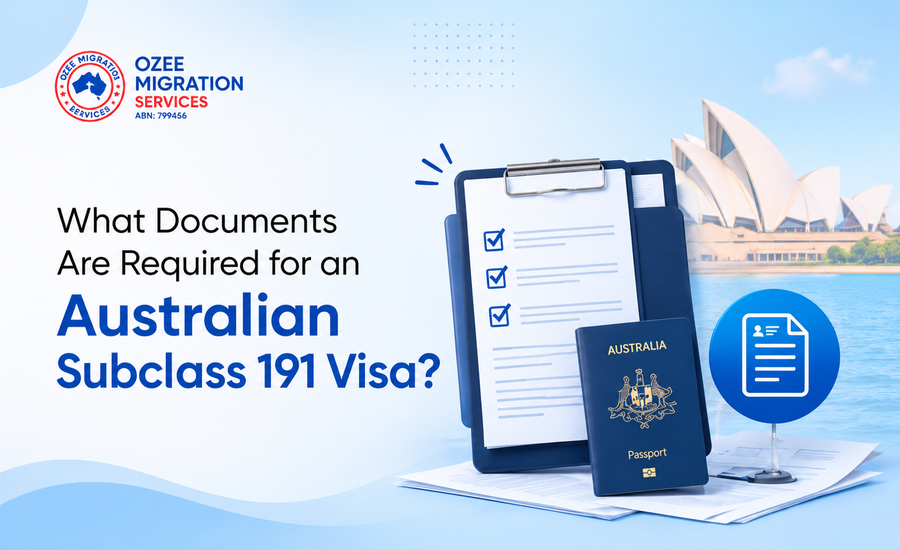
For many skilled migrants, obtaining a permanent visa is an important milestone after spending several years living and working in regional Australia. After building a career, establishing a home and becoming familiar with the local community, the next step is often to secure permanent residency. The Australian Subclass 191 visa offers an opportunity to make this transition for eligible holders of regional provisional visas.
However, reaching this stage involves more than simply completing an application form. Applicants need to demonstrate that they have met the relevant visa requirements and provide documents that support their identity, regional residence, employment history, tax records and personal circumstances. Missing information or inconsistent records can also lead to requests for additional documents from the Department of Home Affairs.
Understanding the documentation requirements in advance can make the application process easier to manage. Whether an applicant previously held a Subclass 491 or Subclass 494 visa, knowing which records to prepare is an important part of applying for permanent residency.
This article explains the documents required for an Australian Subclass 191 visa, why they matter and what applicants should consider before submitting their applications.
Understanding the Australian Subclass 191 Visa
The Permanent Residence (Skilled Regional) visa (Subclass 191) allows eligible skilled migrants to obtain permanent residency after holding an eligible regional provisional visa.
Under the Regional Provisional stream, applicants must have held one of these visas for at least three years:
- Skilled Work Regional (Provisional) visa (Subclass 491).
- Skilled Employer Sponsored Regional (Provisional) visa (Subclass 494).
They must also have complied with their visa conditions and provide ATO notices of assessment for three income years out of the five years of their eligible visa.
There is no minimum taxable income requirement for this stream, but applicants must meet all other applicable visa criteria.
Documents Required for an Australian Subclass 191 Visa
Applicants need to provide documents that establish their identity, previous visa history, regional residence and eligibility for permanent residency. The exact requirements may vary depending on their circumstances and the family members included in the application.
The key documents required for the application are listed below:
1. Passport and Identity Documents
Identity documents help the Department of Home Affairs confirm an applicant’s identity and match their personal details with official records.
Applicants should prepare:
- A valid passport and relevant passport pages.
- A national identity card, if available.
- Birth certificates or other supporting identity records.
- Name-change documents, if applicable.
If an applicant has changed their name after marriage, divorce or through a legal process, they should provide supporting records such as marriage certificates, divorce certificates or official change-of-name documents.
Names, dates of birth and other personal details should be consistent across the application. Partners and dependent family members should also have valid passports or travel documents.
2. Previous Visa Grant Letters and Visa History
Since the Subclass 191 visa is available to eligible regional provisional visa holders, applicants need to provide records of their previous visa status.
The main documents include:
- Subclass 491 or Subclass 494 visa grant letters.
- Records showing visa grant dates and conditions.
- Details of subsequent eligible visa grants, where applicable.
These records help establish that the applicant has held an eligible visa for the required period. Applicants should also check their previous visa conditions and provide relevant information about any changes in their visa circumstances.
3. Documents Showing Residence in a Regional Area
Applicants need to provide supporting evidence of their residence in a designated regional area of Australia while holding their eligible visa.
Useful documents may include:
- Rental agreements or property ownership records.
- Electricity, gas and water bills.
- Telephone and internet bills showing residential addresses.
- Council rates notices.
- School records or other official correspondence showing the applicant’s address.
The evidence will depend on the applicant’s living arrangements. For example, tenants may use rental agreements and utility bills, while property owners may provide ownership documents and council records.
Keeping records from different periods can help present a clearer picture of the applicant’s residential history. Applicants should also check whether their previous addresses fall within the relevant designated regional areas.
4. Employment and Work-Related Documents
Employment records can help support an applicant’s work history while holding a regional provisional visa. The documents required may vary depending on whether the applicant was employed or self-employed.
Common supporting documents include:
- Employment contracts and reference letters.
- Payslips and employer confirmation letters.
- Business and financial records for self-employed applicants.
Employment reference letters should ideally include the employer’s details, job position, employment dates and workplace address. Applicants who have worked for multiple employers should organise their records according to their employment periods.
It is worth understanding that employment evidence is not the same as the ATO income requirement. The Department requires evidence of relevant regional work and separately requires three ATO notices of assessment. There is no minimum taxable income threshold under the Regional Provisional stream.
5. Australian Taxation Office (ATO) Notices of Assessment
ATO notices of assessment are among the most important documents in a Subclass 191 visa application. Applicants must provide notices of assessment for three income years out of the five years of their eligible visa. These documents are issued by the Australian Taxation Office after an individual’s tax return has been assessed and provide details of their tax assessment and taxable income.
Applicants should prepare:
- ATO notices of assessment for three relevant income years.
- Amended notices of assessment, if applicable.
- Evidence of tax debt repayment or an approved payment arrangement, where relevant.
There is no minimum taxable income requirement for the Subclass 191 Regional Provisional stream. However, submitting the required three ATO notices of assessment remains compulsory.
If an applicant or an included family member owes money to the ATO, the debt should be repaid or an approved payment plan should be in place. Applicants should check their tax records carefully before lodging their applications.
6. Police Clearance Certificates and Character Documents
Applicants must meet Australia’s character requirements as part of the permanent visa process. Depending on their personal and residential history, they may need to provide:
- Australian Federal Police (AFP) National Police Certificate.
- Overseas police clearance certificates.
- Military service records or discharge papers, if applicable.
- Form 80 or Form 1221, if requested.
An Australian police certificate is required if the applicant has spent a total of 12 months or more in Australia during the last 10 years since turning 16. Applicants must obtain a complete disclosure National Police Certificate issued by the Australian Federal Police. Standard disclosure certificates and certificates issued by Australian state or territory police are not accepted for this immigration requirement.
Overseas police certificates are also required from every country, including the applicant’s home country, where they have spent a total of 12 months or more during the last 10 years since turning 16. Family members aged 16 and above who are included in the application must also meet the applicable character requirements.
7. Marriage and Relationship Documents
Applicants including a spouse or de facto partner in their Subclass 191 application need to provide documents confirming their relationship.
For married applicants, supporting documents may include:
- Marriage certificate.
- Joint bank account statements.
- Joint lease or mortgage documents.
- Household bills and evidence of shared financial responsibilities.
For de facto partners, applicants generally need to demonstrate that they have been in a de facto relationship for at least 12 months before applying, unless the relationship is registered with an Australian state or territory authority or an applicable exception applies.
Documents showing shared finances, household responsibilities and residential arrangements can help establish the nature of the relationship. Applicants who have previously been married, divorced, widowed or permanently separated should also provide relevant records, such as divorce certificates, death certificates or separation documents.
8. Documents Required for Dependent Children
Applicants including dependent children must provide supporting documents to establish each child’s identity, relationship with the primary applicant and eligibility.
Common documents include:
- Valid passport and birth certificate.
- Adoption papers, where applicable.
- Relevant identity and character documents.
- Court or custody documents, if applicable.
For children over 18, additional eligibility requirements apply. They must generally hold an eligible visa granted on the basis that they were a member of the primary applicant’s family unit and meet the relevant dependent child criteria.
If one or both parents are not included in the application, additional consent or custody documents may be required depending on the circumstances. Applicants should check the documentation requirements for each family member before submitting the application.
9. Health-Related Documents
Applicants must also meet Australia’s health requirements before the Subclass 191 visa can be granted. The Department may request medical examinations through its approved immigration health assessment process. The examinations required depend on individual circumstances and the Department’s instructions.
The health requirement also applies to family members included in the application. In certain circumstances, family members who are not migrating to Australia may also need to meet the relevant health criteria. Applicants should complete any requested examinations within the specified timeframe and provide additional medical information if required.
10. Additional Forms and Supporting Documents
Apart from the main documents, applicants may need to complete additional forms depending on their circumstances and the assistance they receive during the application process.
Some relevant forms include:
- Form 956: Appointment of a registered migration agent, legal practitioner or exempt person.
- Form 956A: Appointment or withdrawal of an authorised recipient.
- Form 80: Additional personal particulars for character assessment.
- Form 1221: Additional personal particulars information.
Applicants should complete the forms relevant to their situation and upload them through ImmiAccount as instructed by the Department. If the Department requests further information or supporting evidence, applicants should respond within the specified timeframe.
How to Prepare and Submit Subclass 191 Visa Documents
Collecting the required documents is important, but applicants should also ensure that their records are properly prepared before submission.
A few practical steps can help avoid common documentation issues:
- Check document details: Ensure names, dates and addresses are consistent across records.
- Organise documents: Keep identity, tax, employment, residence and family records together by category.
- Translate non-English documents: Provide English translations that meet the Department’s requirements. Australian translators must be NAATI-accredited.
- Upload clear copies: Ensure all pages are complete, readable and scanned in colour.
- Review ATO records: Check that the notices cover three relevant income years and include evidence of any required debt repayment or payment plan.
- Check ImmiAccount: Follow the document checklist and respond to any additional requests.
Applicants do not generally need to have their supporting documents certified before uploading them, but they should ensure that the copies are complete and legible.
Common Mistakes to Avoid When Preparing a Subclass 191 Visa Application
Document preparation can take time, particularly for applicants who have lived in different regional locations, changed employers or included family members in their applications.
Some common mistakes that applicants should avoid include:
- Missing ATO notices of assessment.
- Incomplete residence or employment records.
- Incorrect police clearance certificates.
- Missing partner or dependent child documents.
- Unexplained differences in personal information.
- Incomplete translations or missing ATO debt evidence.
Another important point is that having all the documents does not automatically guarantee visa approval. The Department assesses each application against the applicable eligibility and visa criteria.
Taking the time to review the documents before submission can help identify missing information and reduce the possibility of avoidable delays.
Conclusion
Applying for an Australian Subclass 191 visa is an important step for skilled migrants who have spent years building their lives in regional Australia. While meeting the eligibility requirements is essential, preparing the right supporting documents is equally important. Identity records, regional residence evidence, employment documents, ATO notices of assessment and character certificates all help the Department assess different aspects of an application.
Every applicant’s circumstances are different. Someone who has worked for several employers may need to organise additional employment records, while applicants with partners or dependent children must also consider their family’s documentation requirements. Reviewing these details before lodging the application can make the process more organised and help address potential gaps early.
For those who need assistance understanding the Subclass 191 visa requirements, Ozee Migration can provide guidance throughout the application process, from understanding the eligibility criteria and identifying the required documents to organising supporting evidence and preparing the visa application. Get in touch with our registered migration agents to discuss your circumstances and receive guidance on the next steps for your Subclass 191 visa application.
Recent Posts
 Can You Switch From a Tourist Visa to a Partner Visa in Australia?October 22, 2026
 Australia Student Visa Changes from October 2026: New Rules ExplainedOctober 15, 2026
 How Does the Subclass 186 Visa Provide a Path to Permanent Residency?October 7, 2026
 How to Apply for a Subclass 491 Visa in Australia: Step-by-Step GuideSeptember 29, 2026
 Australia Migration Changes 2026: New Visa Rules and Key UpdatesSeptember 18, 2026
