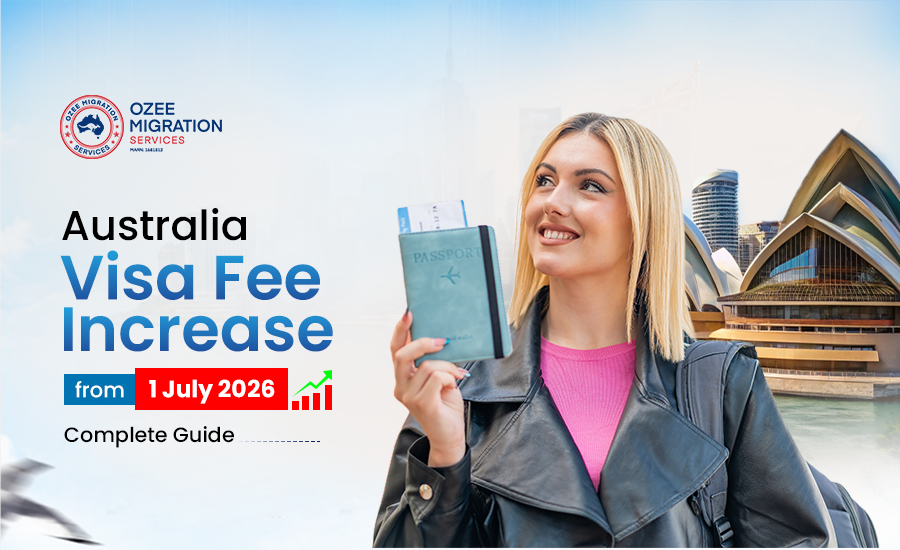
The Australian immigration department has officially raised its visa application charges (VACs) from 1 July 2026. This has made Australian visas more expensive for international students, skilled workers, families, and visitors who apply on or after 1 July, 2026.
Regardless of whether you plan to study, migrate permanently, meet with family, or visit Australia, knowing these new government fees is important for planning your finances accordingly. In this guide, we’ll go over everything you need to know about the changes to Australian visa fees before submitting your application.
Why Has Australia Visa Fees Increased?
These visa fees have undergone major changes this year. Fee hikes are notably larger than the standard CPI-based increases seen in previous years. But what made the Department of Home Affairs make such massive changes in the visa fees across several Australian visa classes?
Well, the Australian government reviews immigration charges to set them in line with the administrative expenses, policy adjustments, and rates of inflation every financial year.
These recent fee changes are intended to improve the integrity of the student visa system and allow the Department to manage Australian migration more sustainably with adequate financial resources. Furthermore, this encourages applicants to be more accountable and submit complete and accurate applications.
Australia Visa Fee Comparison (Before vs After 1 July 2026)
Here’s a detailed overview of some of the most popular Australian visa categories and their base government application fees for the primary applicant:
| Visa Type | Visa Subclass | Before 1 July 2026 | From 1 July 2026 |
|---|---|---|---|
| Visitor Visa | 600 (Tourist Stream Offshore) | AUD 200 | AUD 250 |
| Student Visa | 500 | AUD 2,000 | AUD 2,500 |
| Student Guardian Visa | 590 | AUD 2,000 | AUD 2,500 |
| Temporary Graduate Visa | 485 | AUD 4,600 | AUD 5,750 |
| Skills in Demand Visa | 482 | AUD 3,210 | AUD 4,015 |
| Skilled Independent Visa | 189 | AUD 4,910 | AUD 6,135 |
| Skilled Nominated Visa | 190 | AUD 4,910 | AUD 6,140 |
| Skilled Work Regional Visa | 491 | AUD 4,910 | AUD 6,140 |
| Skilled Employer Sponsored Regional Visa | 494 | AUD 4,910 | AUD 6,140 |
| Employer Nomination Scheme | 186 | AUD 4,910 | AUD 6,140 |
| Partner Visa | 820/801 & 309/100 | AUD 9,365 | AUD 11,710 |
Note:
- These are the standard Visa Application Charges (VACs) for the primary applicant only.
- These visa fees are subject to change.
- Additional fees apply to these visas for dependent applications, health exams, police certificates, English language tests, skills assessments, and other requirements.
Which Visa Categories Are Most Affected?
Although almost every single visa subclass has experienced a major increase in the fee, the following migration pathways saw the largest changes, as explained below:
Student Visas
The Student Visa (Subclass 500) application charges have increased from a previous AUD 2,000 to AUD 2,500. This is a direct 25% increase over last year’s visa cost.
Skilled Migration Visas
Skilled workers apply for permanent residency through Australia’s General Skilled Migration (GSM) program. Applicants applying for the Skilled Independent Visa (Subclass 189), Skilled Nominated Visa (Subclass 190), and Skilled Work Regional (Provisional) Visa (Subclass 491) also need to pay more from July 2026.
Employer-Sponsored Visas
The Skills in Demand Visa (Subclass 482) now costs AUD 4,015, up from AUD 3,210. Permanent employer-sponsored visas, such as the Employer Nomination Scheme (Subclass 186) and Skilled Employer Sponsored Regional (Subclass 494), now cost AUD 6,140 for the primary applicant.
Partner Visas
The Australian government has made family migration quite expensive this year. The Partner Visa (Subclasses 820/801 and 309/100) now costs AUD 11,710, up from AUD 9,365.
Visitor Visas
Individuals worldwide visit Australia for tourism or to meet their family on a visitor visa (Subclass 600). This visa application charge has increased from AUD 200 to AUD 250 for these applicants.
Visa Fee Concessions from 1 July 2026
Although Australia increased Visa Application Charges (VACs) from 1 July 2026, some applicants are eligible for concessions, such as the following:
ELICOS Students: Students enrolled in a standalone English Language Intensive Courses for Overseas Students (ELICOS) program pay reduced student visa (Subclass 500) application charges.
Pacific Island Countries and Timor-Leste: Eligible applicants from Pacific Island countries and Timor-Leste are still eligible to receive concessions for major visas. These nations include:
- Federated States of Micronesia
- Fiji
- Kiribati
- Nauru
- Palau
- Papua New Guinea
- Republic of the Marshall Islands
- Samoa
- Solomon Islands
- Timor-Leste
- Tonga
- Tuvalu
- Vanuatu
Eligible ASEAN Applicants: Certain eligible citizens of ASEAN member countries may also qualify for reduced visa application charges for certain visa categories.
What This Means for Australian Visa Applicants
Australian visas have become more costly from 1 July 2026; this means:
- Applicants applying after 1 July 2026 should budget for the higher Australian visa application fees.
- Visa fees do not include other expenses such as health examinations, English language tests, police clearances, skills assessments, or document translations.
- Eligible ELICOS students or students from an eligible ASEAN, Pacific Island, or Timor-Leste country may be eligible for concessional fees.
- Fill out a complete and accurate application, as application fees are typically non-refundable.
- Always confirm the current visa application fee before going through the process of visa application.
Common Mistakes to Avoid After the New Visa Fee Increase
Here are some common mistakes that applicants frequently make after the fee increase and should be avoided at all costs:
- Relying on outdated information
- Delaying the visa application and risking increased future fees.
- Assuming the same fee applies to all applicants.
- Not accounting for additional expenses such as medical exams, police checks, and skill assessments.
- Submitting an incomplete or incorrect application.
- Lodging the visa application without checking the most recent visa application charges.
- Applying without seeking professional migration advice in complex cases.
Wrapping Up
Australia’s visa fee increase has greatly impacted anyone looking to study, work, visit, or settle in Australia. While you have no control over visa fees, you can submit a detailed and accurate application to avoid errors and make your fee worthwhile.
If you’re planning your Australian migration journey, Ozee Migration can help with the process! Our team of experienced migration agents can assist you with assessing your visa eligibility, preparing the correct documents, and lodging your application. Contact us today to schedule an appointment and get started.
Recommend Read: What Are the New Skilled Visa Income Thresholds in Australia for 2026?
Recent Posts
 How to Apply for a Subclass 491 Visa in Australia: Step-by-Step GuideSeptember 29, 2026
 Australia Migration Changes 2026: New Visa Rules and Key UpdatesSeptember 18, 2026
 Why Choose a Migration Agent in Adelaide for Your Subclass 482 Visa?September 11, 2026
 How Can a Migration Agent in Adelaide Help With a Subclass 887 Visa Application?September 4, 2026
 What Are the Eligibility Requirements for the Skilled Nominated Visa (Subclass 190) in Australia?August 28, 2026